We've been in the construction industry for years, and we've witnessed firsthand the numerous challenges faced in rural and mountainous areas. When working on slopes, the traditional concrete mixers often struggle to move forward. The steep gradient makes it difficult for them to maintain traction, and they're prone to slipping backwards. In muddy areas, it's even worse. The wheels get stuck, and the machines can't move at all. And when it comes to distributing the concrete, the inaccuracy of traditional mixers is a real headache. They often can't place the concrete precisely where it's needed, leading to uneven surfaces and potential safety hazards. These issues not only slow down the construction process but also increase the risk of accidents.
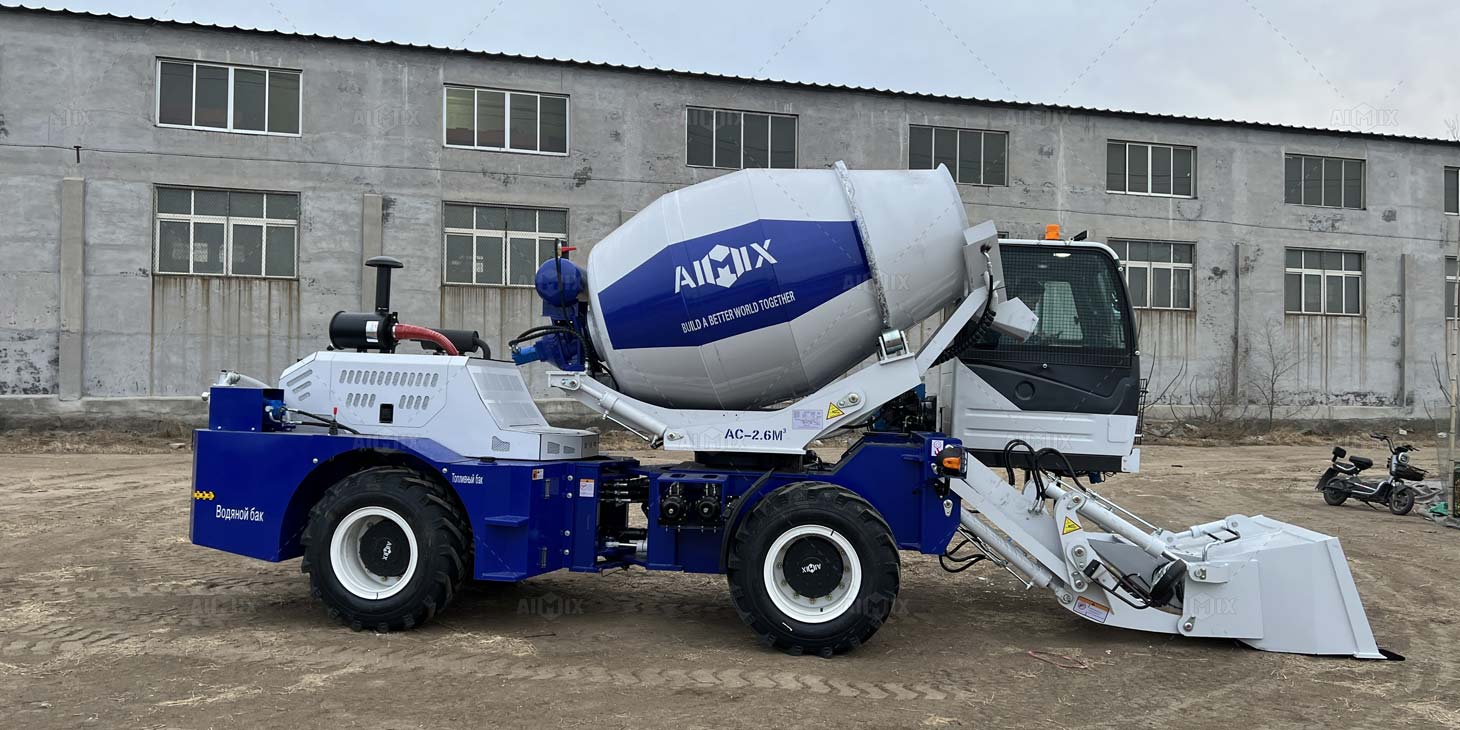
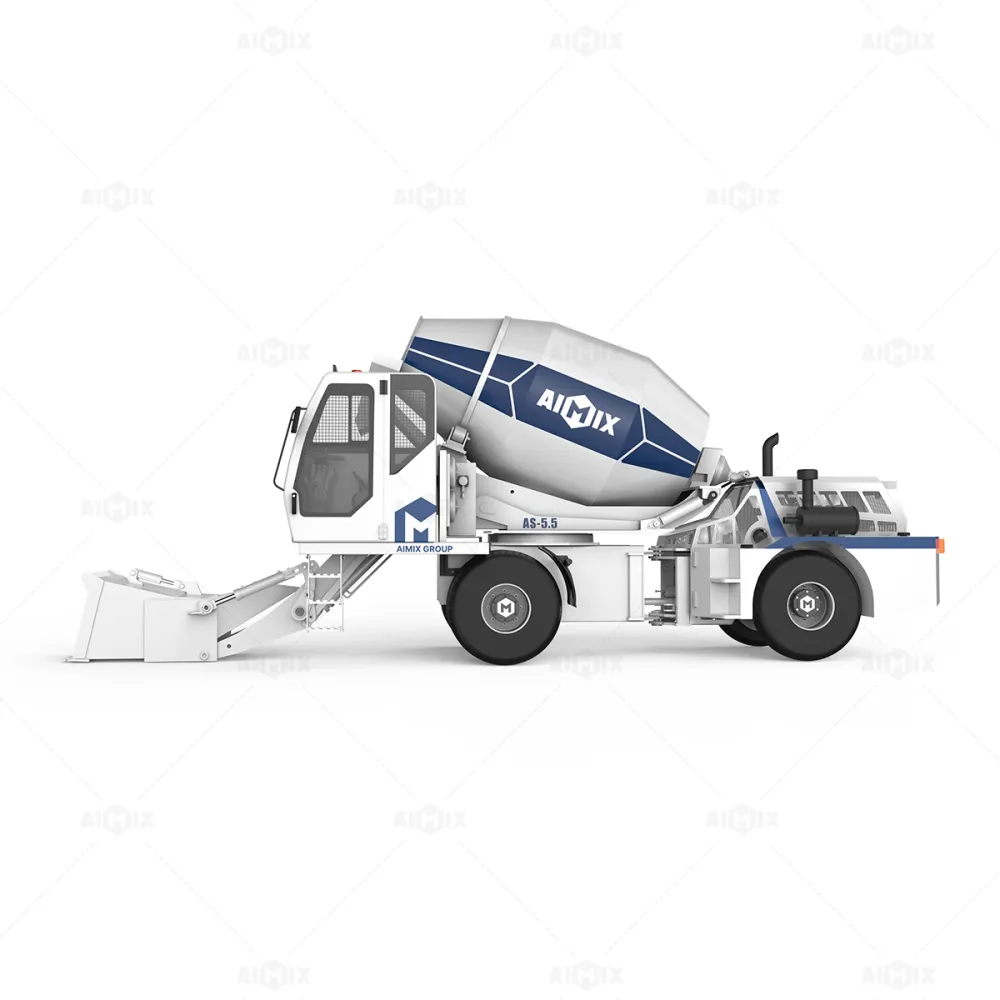
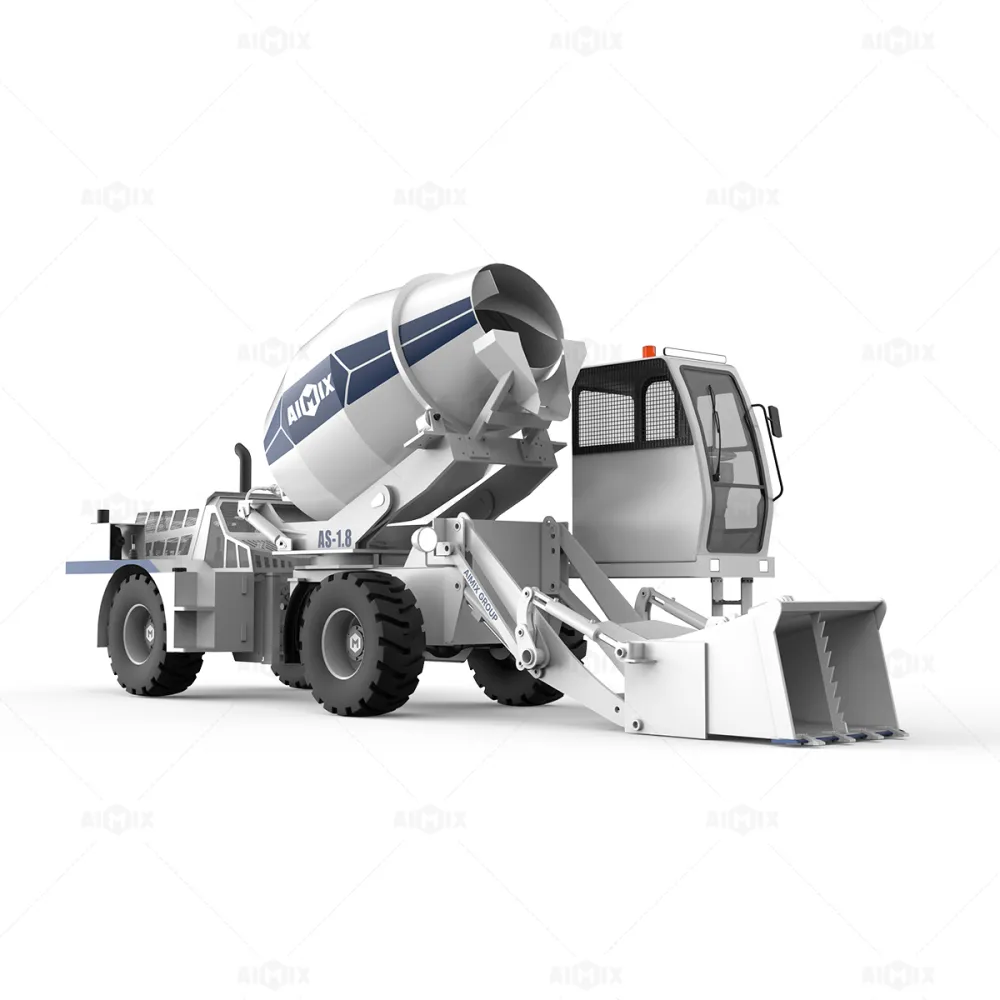
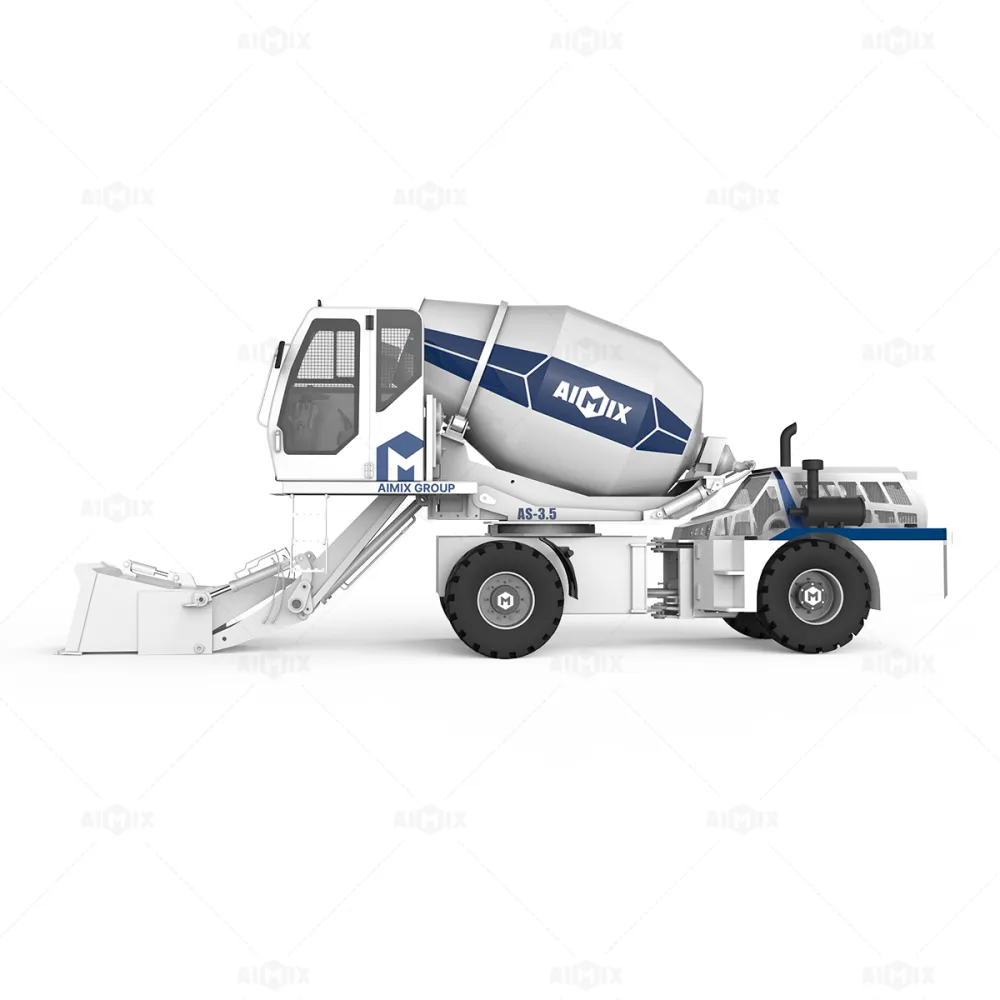
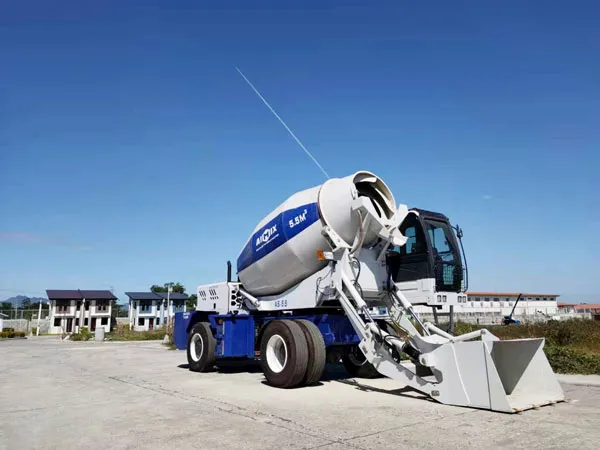
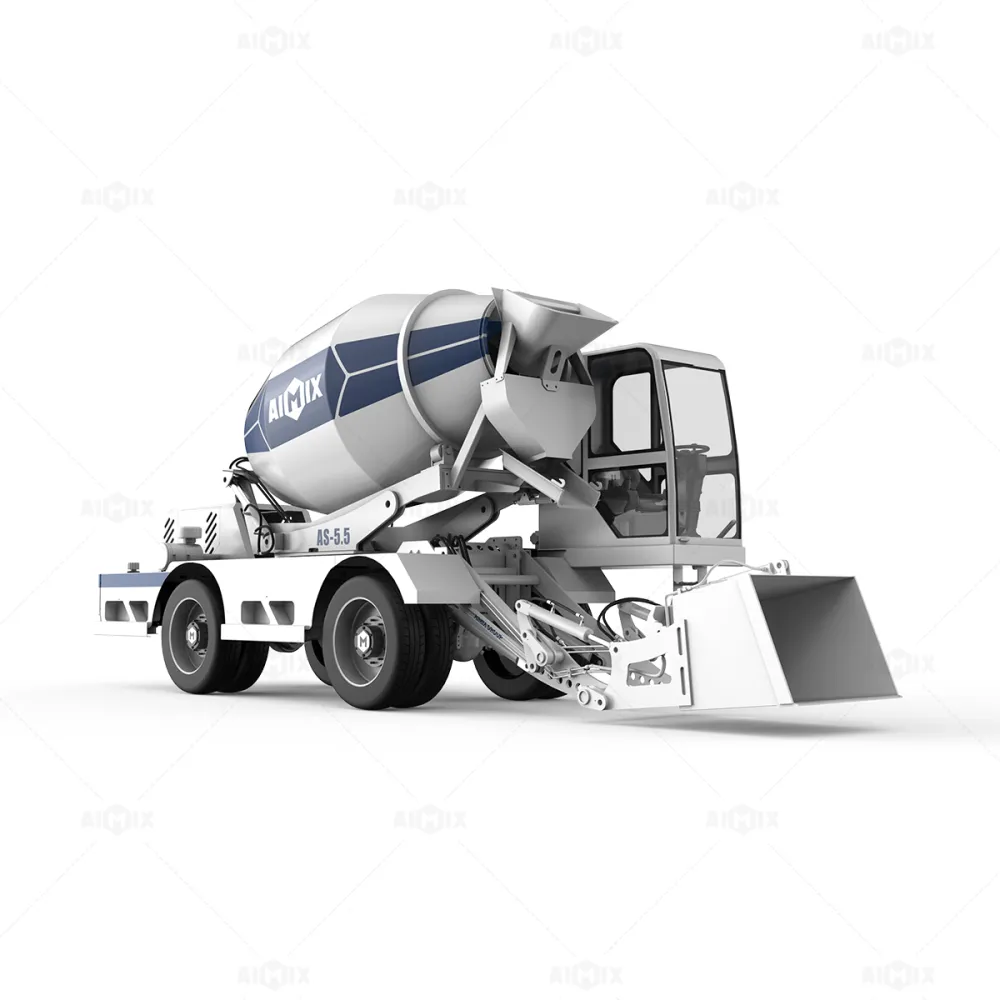
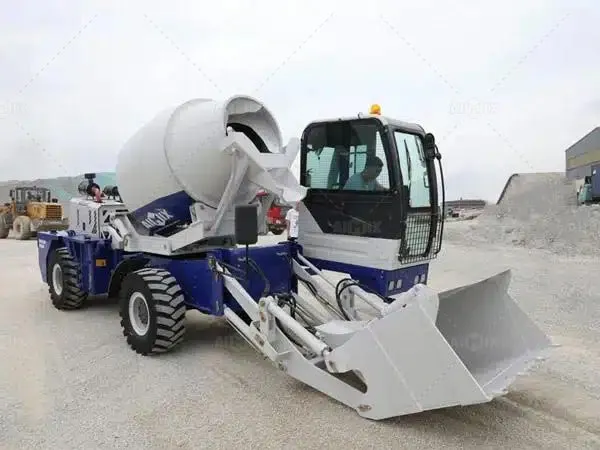
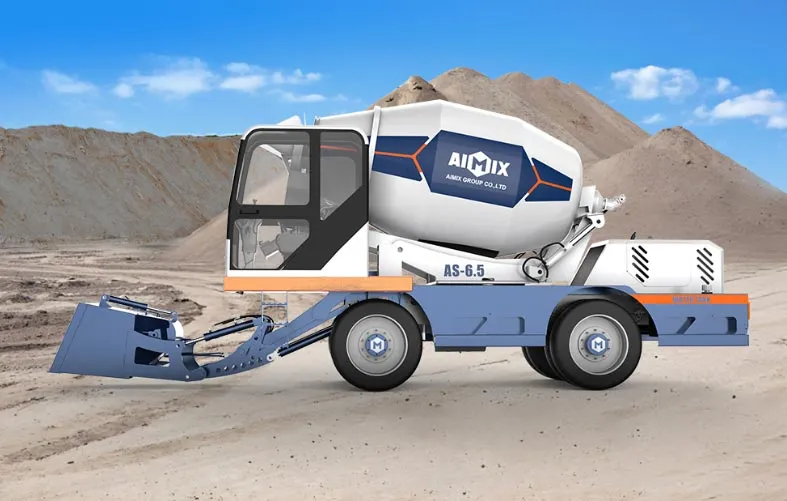
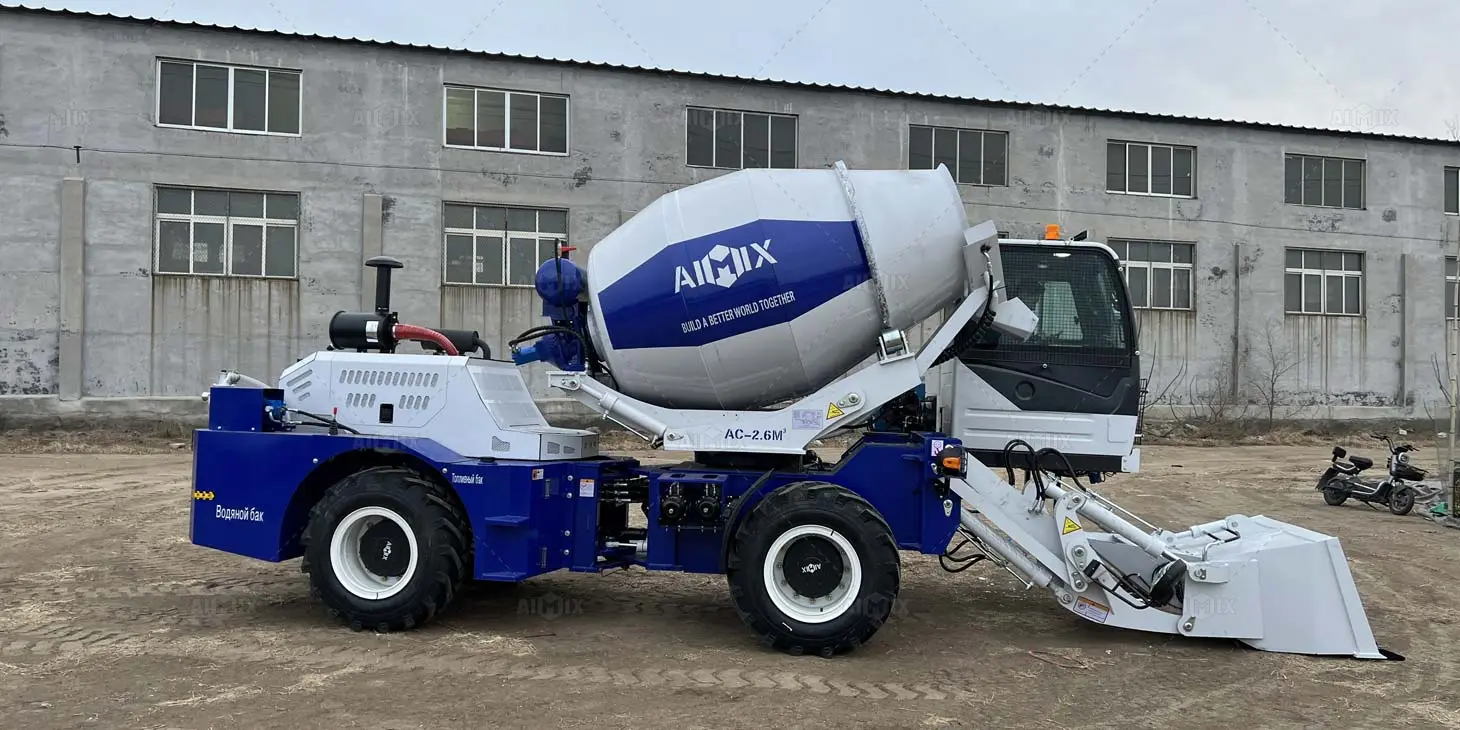
Let's talk about how the articulated frame and engineering tires of the AS - 2.6 2.6 - cubic - meter self - loading concrete mixer work together. Think of the articulated frame like the joints in our human body. Just as our joints allow us to move flexibly in different directions, the articulated frame of this mixer enables it to turn sharply and navigate through tight spaces. The engineering tires, on the other hand, are like our sturdy shoes. They provide a strong grip on the ground, even in the most difficult terrains. This combination significantly improves the mixer's passability and stability. In fact, compared to traditional mixers, the AS - 2.6 can increase the passability rate by up to 30% in non - flat terrains, according to our field tests.
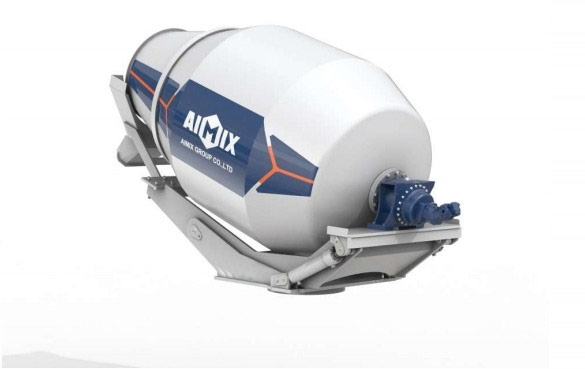
Now, let's focus on the 270° rotating mixing drum. This is a game - changer when it comes to precise concrete distribution. The key lies in the angle control and flow rate matching. By adjusting the rotation angle of the drum, we can ensure that the concrete is poured exactly where it's needed. And by controlling the flow rate, we can match the amount of concrete distributed to the specific requirements of the construction site. For example, in a small corner where less concrete is needed, we can slow down the flow rate and adjust the angle for a more precise pour. This level of control is something that traditional mixers simply can't achieve.
We've seen many real - world examples of how the AS - 2.6 outperforms traditional mixers. In a project in a Southeast Asian mountain area, a traditional mixer was used at first. It had to stop every few minutes due to slipping and inaccurate distribution. The construction progress was extremely slow, with only about 50 cubic meters of concrete being poured per day. After we replaced it with the AS - 2.6, the situation changed dramatically. The mixer could work continuously, and the daily concrete output increased to about 72 cubic meters, a 44% increase in productivity. And the quality of the concrete distribution was much better, resulting in a smoother construction process.
Here are some practical tips for operating the AS - 2.6. First, when using the 270° rotating mixing drum, always start with a small angle adjustment and gradually increase it as needed. Second, make sure to match the flow rate with the angle. If the angle is large, the flow rate should be adjusted accordingly to avoid over - pouring. As for a checklist, here's a simple 'Three - Step Guide to Determine if the AS - 2.6 is Suitable for Your Terrain': 1. Check if the terrain has slopes greater than 15 degrees. 2. Determine if there are muddy or soft areas. 3. Evaluate if precise concrete distribution is required. If you answer 'yes' to any of these questions, then the AS - 2.6 is likely the right choice for you.
So, does your construction site face similar challenges? If you're tired of dealing with the inefficiencies and safety risks of traditional mixers in non - flat terrains, it's time to consider a better solution. The AS - 2.6 2.6 - cubic - meter self - loading concrete mixer is not just a piece of equipment with a bunch of technical parameters; it's a reliable solution designed for front - line engineers. Click here to learn more about how the AS - 2.6 can transform your construction projects!