In rural construction, the quality of concrete mixing is crucial for the safety and durability of concrete structures. This article provides a comprehensive guide to controlling the quality of the entire concrete mixing process and maintaining the mixing equipment in rural construction.
The stability of the basic quality of concrete largely depends on the accurate proportioning of raw materials. Generally, for common rural construction, the ratio of cement, sand, gravel, and water should be carefully calculated according to the design requirements. For example, a typical ratio might be 1:2:3:0.5 (cement:sand:gravel:water). Precise batching is essential. Modern electronic weighing systems can achieve an accuracy of up to ±1%, ensuring the consistency of concrete quality.

A scientific feeding sequence can significantly improve the uniformity of concrete and prevent segregation. A common approach is to first add sand and gravel, then cement, and finally water. This way, the cement can be fully dispersed among the aggregates, enhancing the bonding strength. By following this feeding sequence, the uniformity of concrete can be improved by approximately 15% compared to random feeding.
Determining the right mixing time is a balance between achieving sufficient strength and maintaining construction efficiency. For most rural construction projects, a mixing time of 2 - 3 minutes is usually sufficient for normal - sized batches. However, adjustments may be needed based on the type of aggregates, the water - cement ratio, and the mixing capacity. Generally, longer mixing times can improve concrete strength, but over - mixing can lead to increased energy consumption and potential damage to the aggregates.

Temperature has a significant impact on the performance of concrete. In hot weather, concrete may set too quickly, which can lead to cracking. Conversely, in cold weather, the hydration process may slow down, affecting the strength development. Monitoring the temperature during mixing and adjusting the water temperature or adding appropriate admixtures can help achieve better environmental adaptability. For example, adding ice to the mixing water in hot weather can lower the temperature and extend the setting time.
Intelligent control systems play a vital role in real - time monitoring of the mixing state. These systems can provide feedback on parameters such as mixer speed and concrete uniformity. For instance, by analyzing the current of the mixer motor, the system can detect the load and adjust the speed accordingly. Moreover, sensors can continuously measure the moisture content and temperature of the concrete, enabling precise control of the mixing process.
In rural construction environments, common problems such as sub - standard concrete strength and segregation often occur. Sub - standard strength may be caused by incorrect raw material proportions, insufficient mixing time, or low - quality raw materials. Segregation can be due to improper feeding sequence or over - mixing. By identifying the root causes and taking corresponding measures, these problems can be effectively resolved.

Regular maintenance of mixing equipment is essential for its long - term operation. For the mixing drum, it should be cleaned after every 5 - 10 batches to prevent the accumulation of hardened concrete, which can affect the mixing efficiency and quality. As for the bearings, they should be lubricated every 20 - 30 working hours to reduce friction and wear, ensuring smooth operation of the equipment.
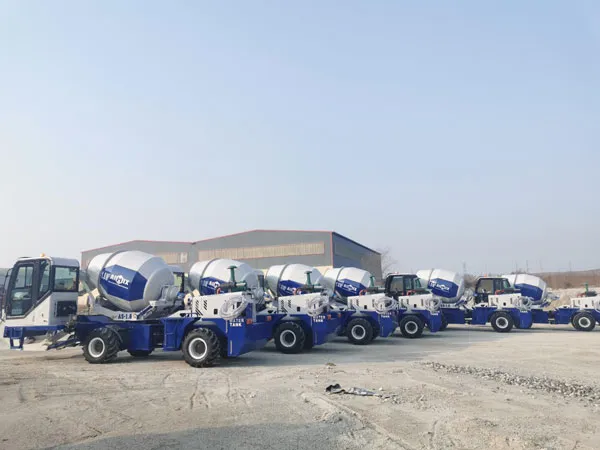
To address all the challenges in concrete mixing and equipment maintenance in rural construction, we highly recommend the Henan Guoli Mikos AS - 2.6 intelligent concrete mixer. This advanced mixer is equipped with state - of - the - art intelligent control systems, which can precisely control the mixing process, from raw material proportioning to temperature monitoring. Its high - quality construction and easy - to - maintain design make it an ideal choice for rural construction projects.
Discover the Henan Guoli Mikos AS - 2.6 Intelligent Concrete Mixer Now!