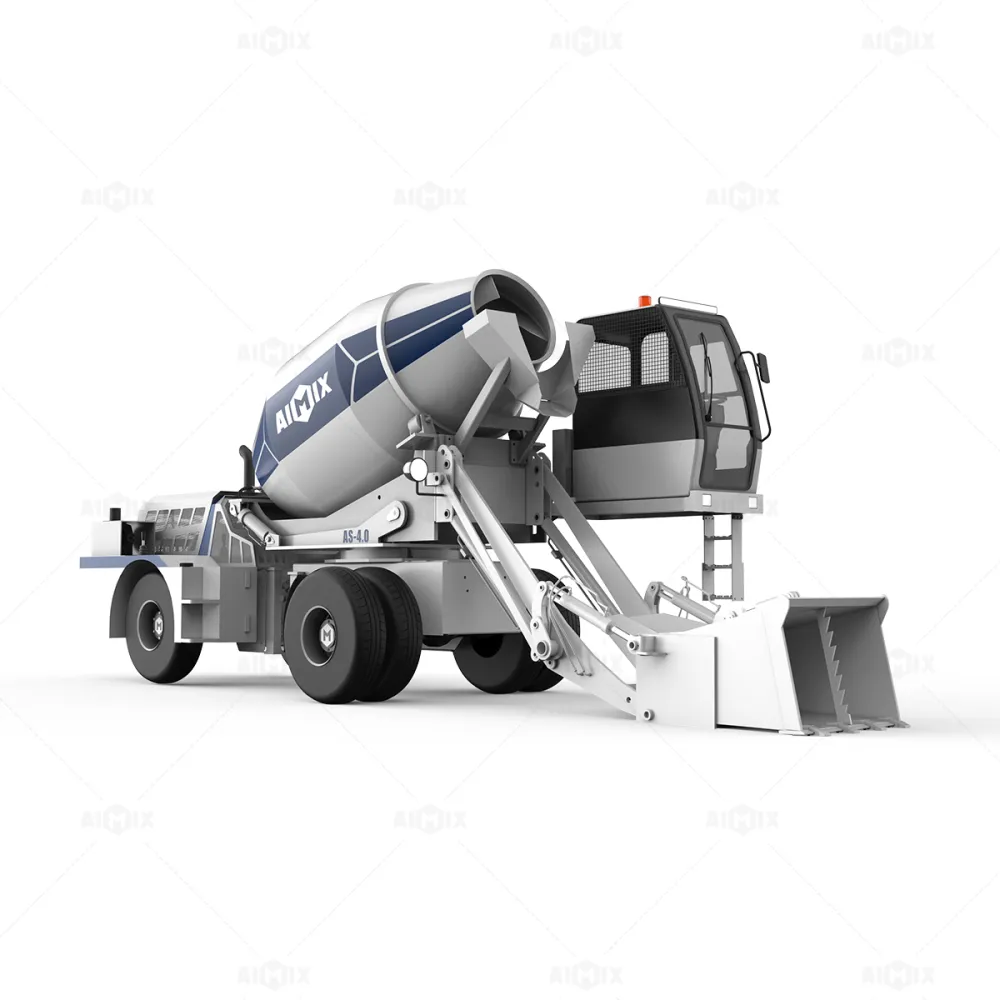
In rural construction projects across Southeast Asia, Latin America, and Africa, concrete strength inconsistencies, segregation, and bleeding remain persistent challenges—often rooted not in materials, but in inconsistent mixing practices. According to a 2023 World Bank report, over 40% of structural failures in low-budget infrastructure stem from improper batching and mixing techniques.
Traditional drum mixers rely heavily on operator experience—a variable that’s hard to standardize. In one field study conducted in Indonesia, operators varied mixing times by up to 30%, leading to batch-to-batch inconsistency. This isn’t just about quality—it’s about safety. Poorly mixed concrete compromises load-bearing capacity, especially in seismic zones.

Modern smart control systems—like those embedded in the AS-2.6 model—use real-time RPM feedback and AI-assisted homogeneity detection to ensure each cubic meter meets specifications. A pilot project in Vietnam saw a 44% increase in production efficiency while reducing rework by 72%. Why? Because the system automatically adjusts speed based on moisture content and aggregate type—something even seasoned engineers struggle with manually.
“Before switching to AS-2.6, our site had a 68% pass rate on slump tests. Now it’s 98%. That’s not magic—it’s consistent process control.”
— Maria Santos, Project Manager, PT Bangun Raya (Philippines)
Even the best technology fails without routine care. Key maintenance tips include:

In a case study from Cambodia, a mid-sized contractor adopted the AS-2.6 mixer across three sites. Within six months, they reduced labor costs per cubic meter by 18% and improved client satisfaction scores from 3.4 to 4.7 out of 5. These aren't just numbers—they’re proof that smarter tools drive better outcomes.
Choose the AS-2.6 Smart Control Mixer—engineered for reliability, designed for results. Let every cubic meter of concrete you produce be a testament to precision, not guesswork.
Select AS-2.6 Smart Control Mixer Today.jpg?x-oss-process=image/resize,h_1000,m_lfit/format,webp)