
This guide systematically outlines the key aspects of quality control in the concrete mixing process for rural construction. It covers raw material ratio calculation, feeding sequence optimization, mixing time setting, and temperature control. By addressing the common issues of insufficient concrete strength and segregation, it provides in - depth analysis of how each step affects the quality of concrete.
Let's start with the raw material ratio. Scientifically configured raw material ratios are the foundation of high - quality concrete. For example, in a typical rural construction project, the ratio of cement, sand, gravel, and water needs to be carefully calculated. Usually, a cement - to - aggregate ratio of around 1:3 can ensure a certain strength of the concrete. Incorrect ratios can lead to problems such as low strength and segregation. As shown in Figure 1, different ratios result in different concrete qualities.

The feeding sequence also plays a crucial role in concrete quality. A proper feeding sequence can ensure better mixing and prevent segregation. Generally, adding coarse aggregates first, then fine aggregates, and finally cement and water can promote more uniform mixing. In some rural construction cases, incorrect feeding sequences have led to up to 30% reduction in concrete strength. Figure 2 illustrates the ideal feeding sequence for better concrete quality.

Proper mixing time is essential for achieving a homogeneous mixture. For most rural construction concrete, a mixing time of 3 - 5 minutes can ensure sufficient blending of materials. If the mixing time is too short, the concrete may not be fully mixed, resulting in uneven strength. Temperature also affects concrete quality. In cold weather, the concrete may set too slowly, while in hot weather, it may dry out too quickly. Maintaining a temperature between 10 - 30°C during mixing can help ensure optimal concrete performance.
Intelligent control systems are revolutionizing the concrete mixing process. These systems can monitor the mixing state in real - time, provide speed feedback, and judge the uniformity of the materials. For example, they can detect if the mixing speed is too fast or too slow and adjust it automatically. This technology can significantly improve the accuracy of operation and the stability of mixing quality. With an intelligent control system, the probability of concrete segregation can be reduced by up to 40%.
Regular equipment maintenance is necessary for consistent concrete quality. For the mixing drum, it should be cleaned after every 5 - 10 batches of mixing to prevent material residue from affecting subsequent batches. Bearing lubrication should be carried out every 20 - 30 working hours to ensure smooth operation. Figure 3 provides a maintenance schedule for reference.

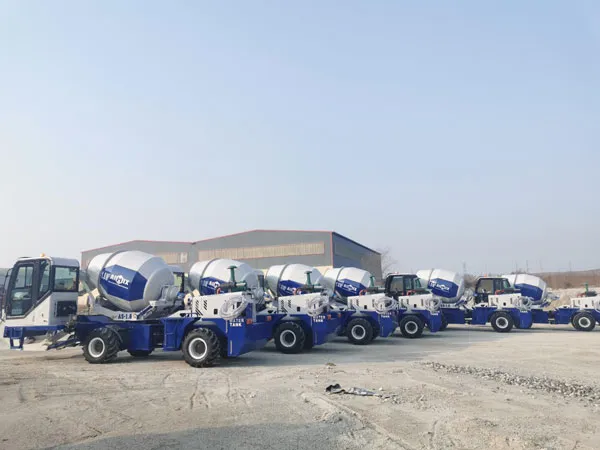
To efficiently solve the concrete quality problems in rural construction, the AS - 2.6 Intelligent Self - Loading Concrete Mixer from Henan Guoli Micos Technology is highly recommended. This mixer is designed with advanced technology, including an intelligent control system, to ensure accurate mixing and high - quality concrete production.














.jpg?x-oss-process=image/resize,h_1000,m_lfit/format,webp)
.jpg?x-oss-process=image/resize,h_1000,m_lfit/format,webp)