How to Efficiently Use Concrete Pumps on Construction Sites: Basic Operation Tips
18 06,2026
Operating Instructions
Discover the fundamental operation tips for concrete pumps on construction sites with AIMIX. This page covers pipe laying, pumping processes, common scenarios, and on-site coordination to enhance your equipment efficiency.
Introduction to Efficient Concrete Pump Operations
Concrete pumps play a critical role on modern construction sites, enabling fast, safe, and consistent delivery of concrete. As a leading provider of construction machinery, AIMIX focuses on empowering projects worldwide with reliable concrete pump technology and operational expertise.
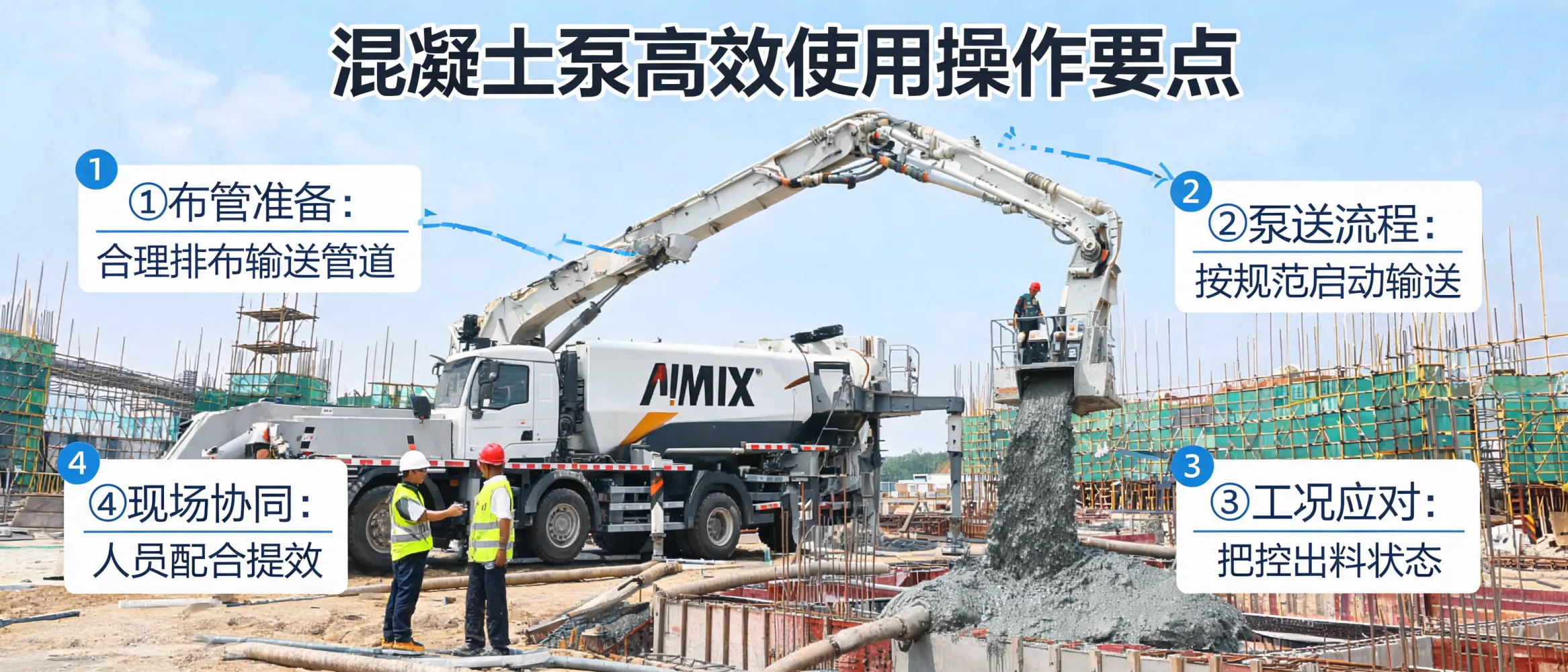
This guide presents essential tips for efficient use of concrete pumps, covering pipe laying strategies, pumping process management, and on-site coordination. Proper understanding and execution of these fundamentals can significantly enhance project productivity and equipment longevity.
1. Pipe Laying: Foundation for Smooth Pumping
-
Plan the route carefully: Minimize bends and vertical lifts to reduce pressure loss.
-
Secure connections: Ensure all pipe joints and couplings are properly tightened and sealed to prevent leakage or air intrusion.
-
Support pipes adequately: Use clamps and supports to keep piping stable and aligned, avoiding sagging or misalignment.
-
Check for obstructions: Clear the pump hose pathway from debris or obstacles before starting operations.
2. Managing the Pumping Process
Effective pumping requires coordinated timing and flow control. Key operational practices include:
-
Start with a priming slurry: Fill pipes with pumping aid to reduce friction and prevent blockages.
-
Monitor pressure gauges: Keep pump pressure within recommended ranges to avoid damage or hose bursts.
-
Maintain steady concrete flow: Avoid sudden stops or surges to reduce wear on the equipment.
-
Use experienced operators: Skilled technicians can adjust pumping speed and resolve minor issues promptly.
3. On-Site Coordination and Safety
Coordination on the jobsite ensures smooth workflow and minimizes downtime. Consider the following:
-
Communication between pump operator and site staff: Use radios or hand signals to synchronize pouring and pipe movements.
-
Establish clear safety zones: Keep unauthorized personnel away from moving parts and concrete placement areas.
-
Regularly inspect equipment: Check hoses, valves, and pump components for wear or leaks before and during operations.
-
Plan for weather conditions: Rain, extreme heat, or cold can affect pumping performance and concrete setting times.
Why Choose AIMIX Concrete Pumps?
As part of AIMIX’s commitment to building a better world, our concrete pumps combine advanced engineering with user-friendly features designed for durability and efficiency.
-
Comprehensive product support: We provide full training and maintenance guidance to maximize uptime.
-
Tailored solutions: Equipment can be customized to project size and site requirements.
-
Global service network: With offices and partners across multiple countries, AIMIX offers rapid response and parts availability.
-
Proven reliability: Our pumps have been successfully deployed in over 100 countries, trusted by professionals worldwide.
Leveraging AIMIX’s expertise in concrete pump operations can enhance your construction site’s efficiency, safety, and overall project quality.


.jpg?x-oss-process=image/resize,h_1000,m_lfit/format,webp)