

Ensuring the consistent quality of concrete is critical, especially in rural construction where challenges such as achieving desired strength and avoiding segregation are frequent. This article meticulously dissects the entire quality control workflow in the concrete mixing process. By focusing on key technical aspects—ranging from raw material proportioning and optimized feeding sequences to stirring time and temperature regulation—this guide offers actionable insights for stable concrete output.
Accurate mix design forms the backbone of high-quality concrete. For rural developments, a typical mix might target a compressive strength of 25-30 MPa. The precise calculation of cement, aggregates, water, and additives ensures this target is met without compromising workability. Incorrect ratios often lead to strength deficiencies or increased porosity.
Additionally, controlling the loading sequence influences homogeneity. Standard practice involves first adding coarse aggregates, followed by cement and fine aggregates, then water and admixtures. This sequence minimizes material segregation risks and ensures thorough wetting of cement particles, promoting uniform hydration.
Stirring time is pivotal for homogenization. Industry studies indicate mixing periods between 60 to 90 seconds produce optimal particle dispersion for small-to-medium batch mixers. Under-mixing leads to clumps and strength variability, while over-mixing can induce excessive air entrapment, reducing durability.
Temperature monitoring during mixing is crucial, as elevated temperatures accelerate hydration, risking early setting and cracking. Maintaining mix temperature within 10-30°C, particularly in rural environments, preserves workability window and final strength consistency.

Contemporary concrete mixers integrate intelligent control technologies that enhance process reliability. Real-time feedback on drum rotation speed ensures adherence to programmed mixing times and prevents under or over mixing.
Furthermore, sensors analyzing material uniformity enable operators to detect segregation signs early. For example, optical or ultrasonic sensors can assess aggregate distribution consistency. This data-driven approach empowers timely adjustments in mixing parameters to maintain product standards.

Consistent mixing quality also depends on meticulous equipment upkeep. Daily cleaning of the mixing drum eliminates residual buildup that can affect material adhesion and batch purity.
Regular lubrication of bearings and inspection of blade integrity prevent mechanical failures that disrupt homogeneous mixing. Implementing a checklist-based maintenance protocol enhances operational efficiency and extends machine lifespan—critical considerations for rural projects with limited technical support.
| Maintenance Task | Frequency | Key Notes |
|---|---|---|
| Mixing Drum Cleaning | Daily | Prevent buildup, ensure batch purity |
| Bearing Lubrication | Weekly | Avoid mechanical wear and tear |
| Blade Inspection & Replacement | Monthly | Maintain mixing efficiency |

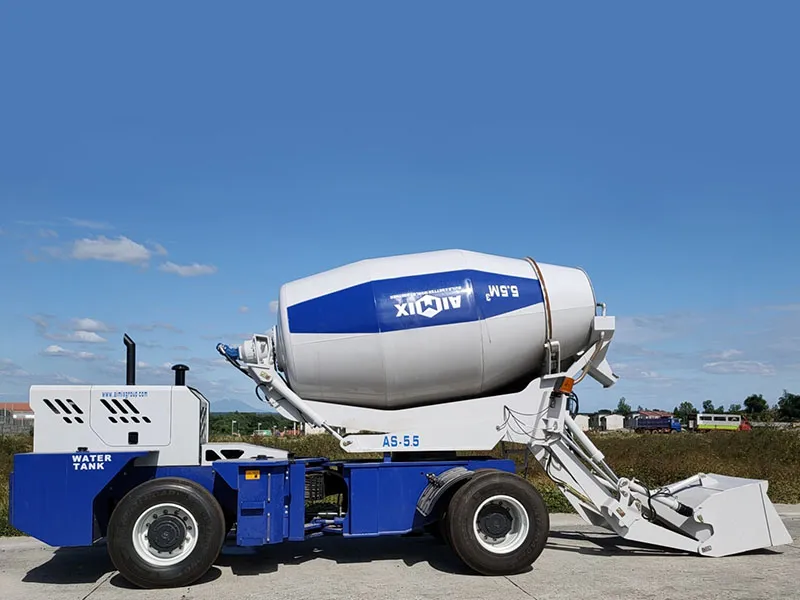
A practical case from Henan Province demonstrates how integrating intelligent mixers transforms rural building projects. The AS-2.6 self-feeding concrete mixer from Guoli Mikos Technology Co., Ltd. combines sensor-based monitoring with adaptive control of feeding and stirring cycles. This machine resolves common issues like inconsistent strength and material segregation by maintaining optimized mixing parameters autonomously.
Contractors report a 20% reduction in raw material waste and a notable improvement in structural durability post-implementation. The intuitive interface and automated operation also reduce labor intensity, accelerating project timelines.


.jpg?x-oss-process=image/resize,h_1000,m_lfit/format,webp)





.jpg?x-oss-process=image/resize,h_1000,m_lfit/format,webp)



.jpg?x-oss-process=image/resize,h_1000,m_lfit/format,webp)
