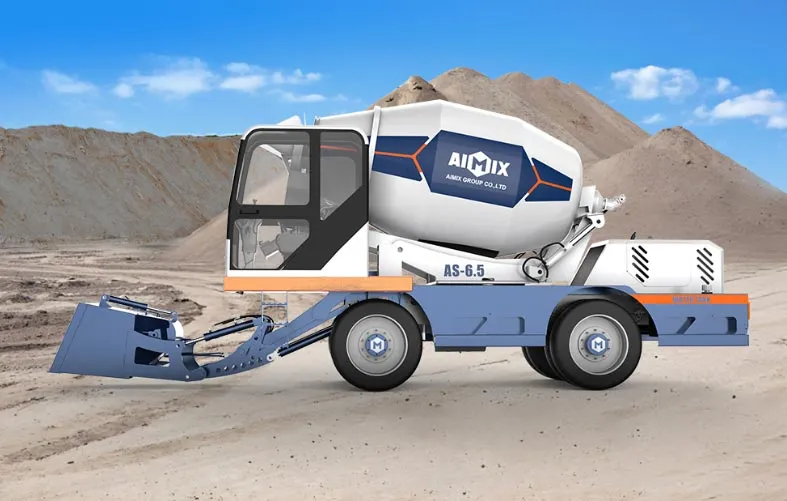
Industry Research (Decision Stage) • Self Loading Concrete Mixer Truck • Large Construction Projects
How Large Construction Projects Improve Concrete Supply Efficiency & Quality with the AS-5.5 Self Loading Concrete Mixer Truck
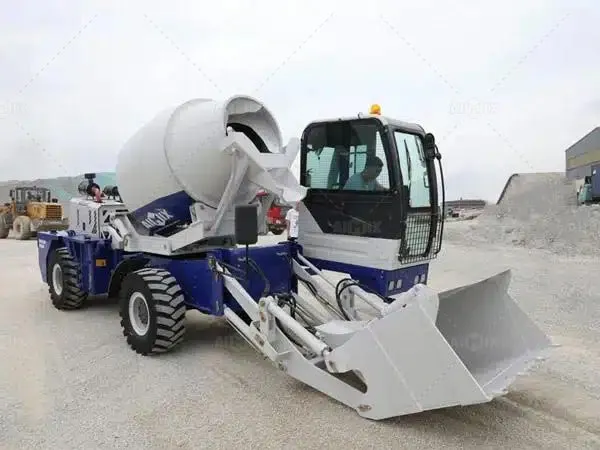
On large-scale sites, concrete logistics is rarely “just logistics.” It controls crew rhythm, pour continuity, rework risk, and ultimately the delivery date. The AS-5.5 self loading concrete mixer truck—integrating loading, mixing, transport, and discharge—targets the exact friction points that slow down bridges, municipal upgrades, and tight urban jobsites.
The Real Bottleneck: Continuous Supply with Stable Quality
Large projects often plan concrete by the cubic meter, but execution is governed by minutes: truck arrival windows, pump availability, traffic constraints, and on-site coordination. Traditional solutions—small mobile batching stations or reliance on distant ready-mix plants—can introduce stop-and-go production. Even a 15–25 minute interruption during critical pours (pile caps, bridge piers, deck sections) can increase cold joint risk, push overtime, and create variability in slump and finish quality.
Project managers typically face three recurring constraints:
- Low on-site throughput from small stations or manual loading—especially when aggregate handling is inefficient.
- Scheduling volatility caused by external plant queues, road restrictions, or limited truck availability.
- Space limitations in city road upgrades, bridge approach works, and constrained staging areas.
In that context, an integrated self loading concrete mixer truck becomes less of a “machine choice” and more of a workflow decision: it compresses the supply chain into one controllable unit that can be positioned where the pour needs it.
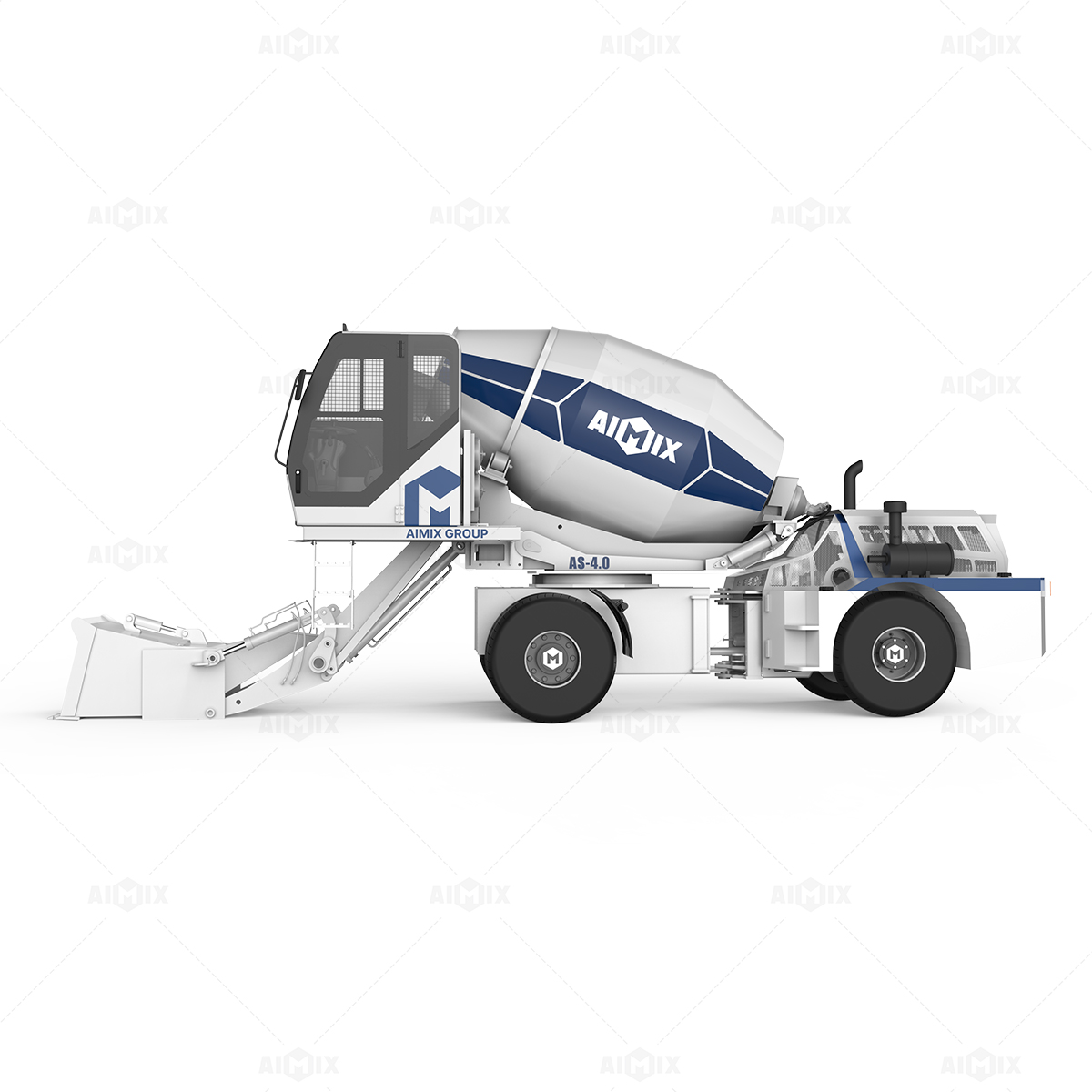
Why AS-5.5 Works: Loading + Mixing + Discharging in One Cycle
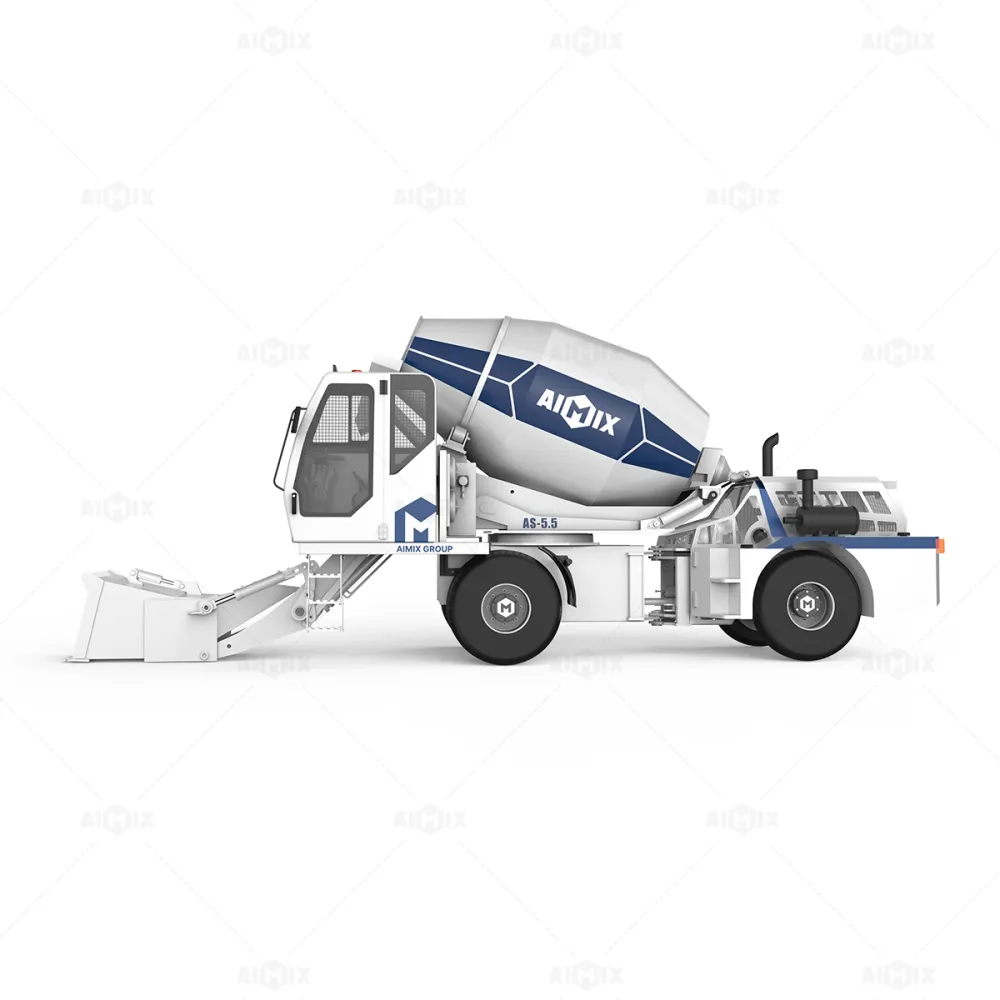
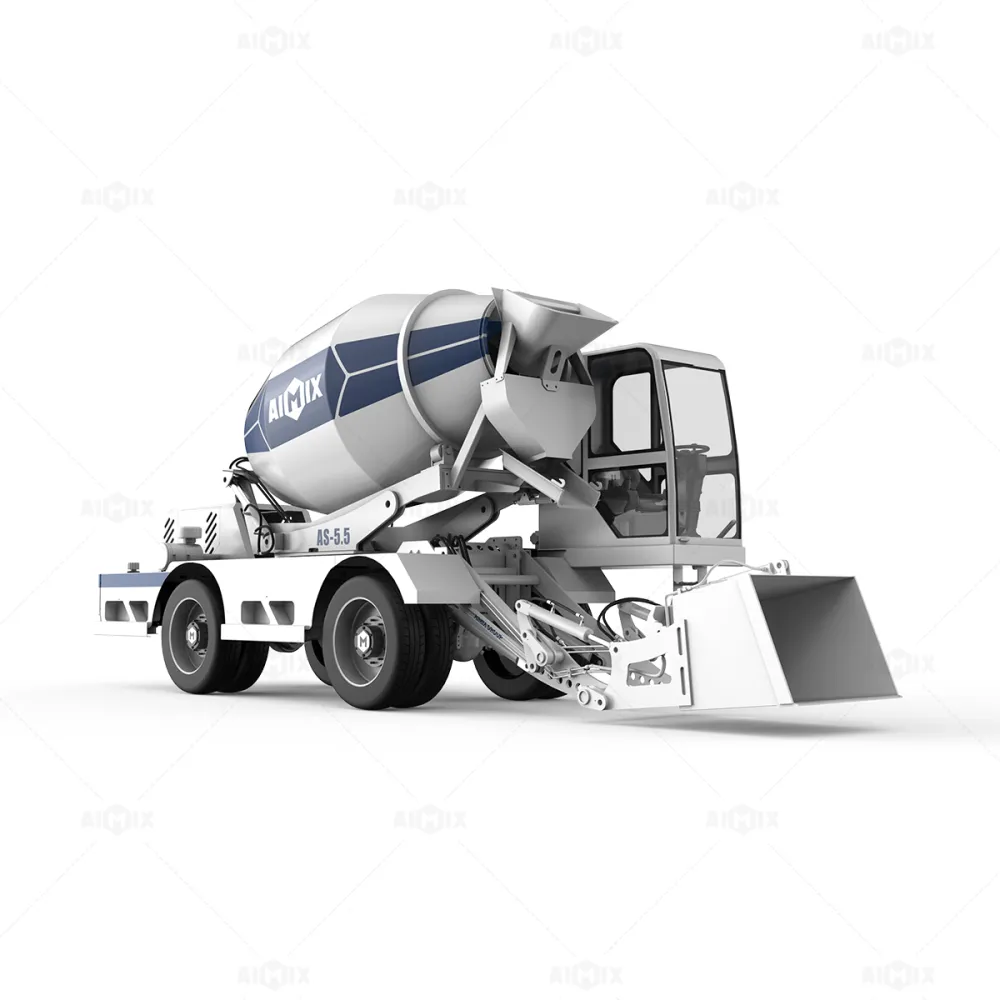
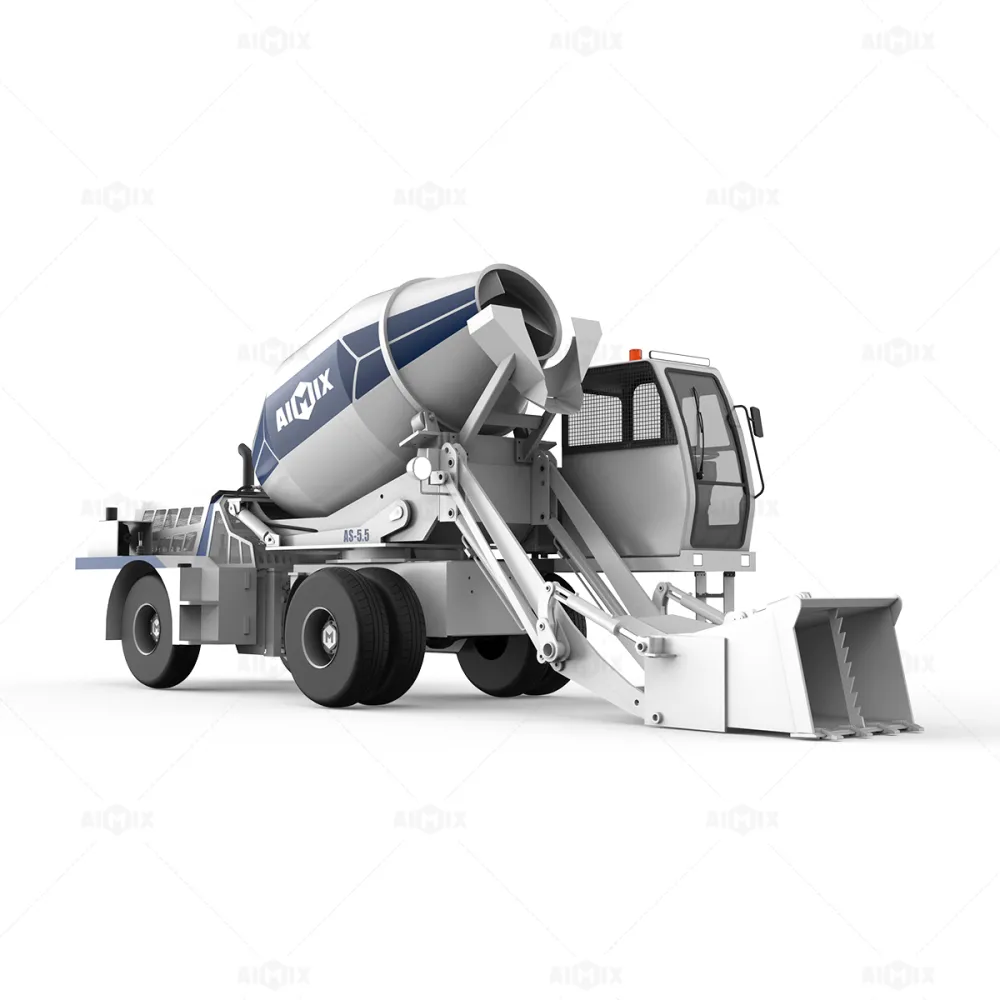
The AS-5.5 is built around a simple operational promise: reduce transitions. Every transition (loader to bin, bin to mixer, mixer to truck, truck to pump) is a place where time is lost and quality drifts. By integrating these steps, the AS-5.5 can efficiently replace a traditional small mobile batching plant in many jobsite setups—especially where rapid repositioning and limited footprint matter.
Output that makes scheduling easier: up to 22 m³/hour
In real site conditions (operator skill, material moisture, travel distance within the site), integrated units typically perform below “ideal lab numbers.” Even so, an AS-5.5 class machine is commonly deployed for continuous production at a practical level that supports up to around 22 m³ per hour when the aggregate stockpile and water source are set sensibly near the work face.
5.5 m³ capacity: fewer cycles, less waiting, steadier pours
Capacity becomes critical once the job moves from “small patching” to “structural rhythm.” With a 5.5 m³ drum, each batch supports longer uninterrupted placement. For large pours, fewer cycles translate into fewer starts/stops for the placing crew and better consistency in finish and compaction—particularly on columns, pier caps, and road base layers where uniformity is visually and structurally unforgiving.
Quantifiable Impact: Time Saved, Quality Stabilized
On projects where concrete production is constrained by coordination rather than raw equipment horsepower, the AS-5.5 typically improves performance by removing wait states. A common benchmark used by contractors is reducing on-site waiting time by 30%+—especially when the previous workflow relied on small stations, shared loaders, or irregular ready-mix arrivals.
| Site KPI | Traditional Small Mobile Station / External Supply | AS-5.5 Self Loading Concrete Mixer Truck |
|---|---|---|
| Concrete continuity | Frequent pauses due to loader/station/truck coordination | Integrated workflow supports steadier pour rhythm |
| On-site waiting time | High, often driven by dispatch windows and shared equipment | Typically 30%+ less idle time when properly staged |
| Usable production rate | Variable; often bottlenecked by feeding and transfer steps | Up to 22 m³/hour in well-organized site layouts |
| Quality consistency | More variability across loads when interruptions occur | More stable slump/finish due to fewer delays and controlled mixing cycle |
| Site footprint | Requires station area, loader lanes, stockpiles, traffic management | More compact setup; better for tight or phased urban work zones |
Reference figures reflect common contractor reporting on constrained sites; actual results depend on material staging, operator proficiency, and pour logistics.
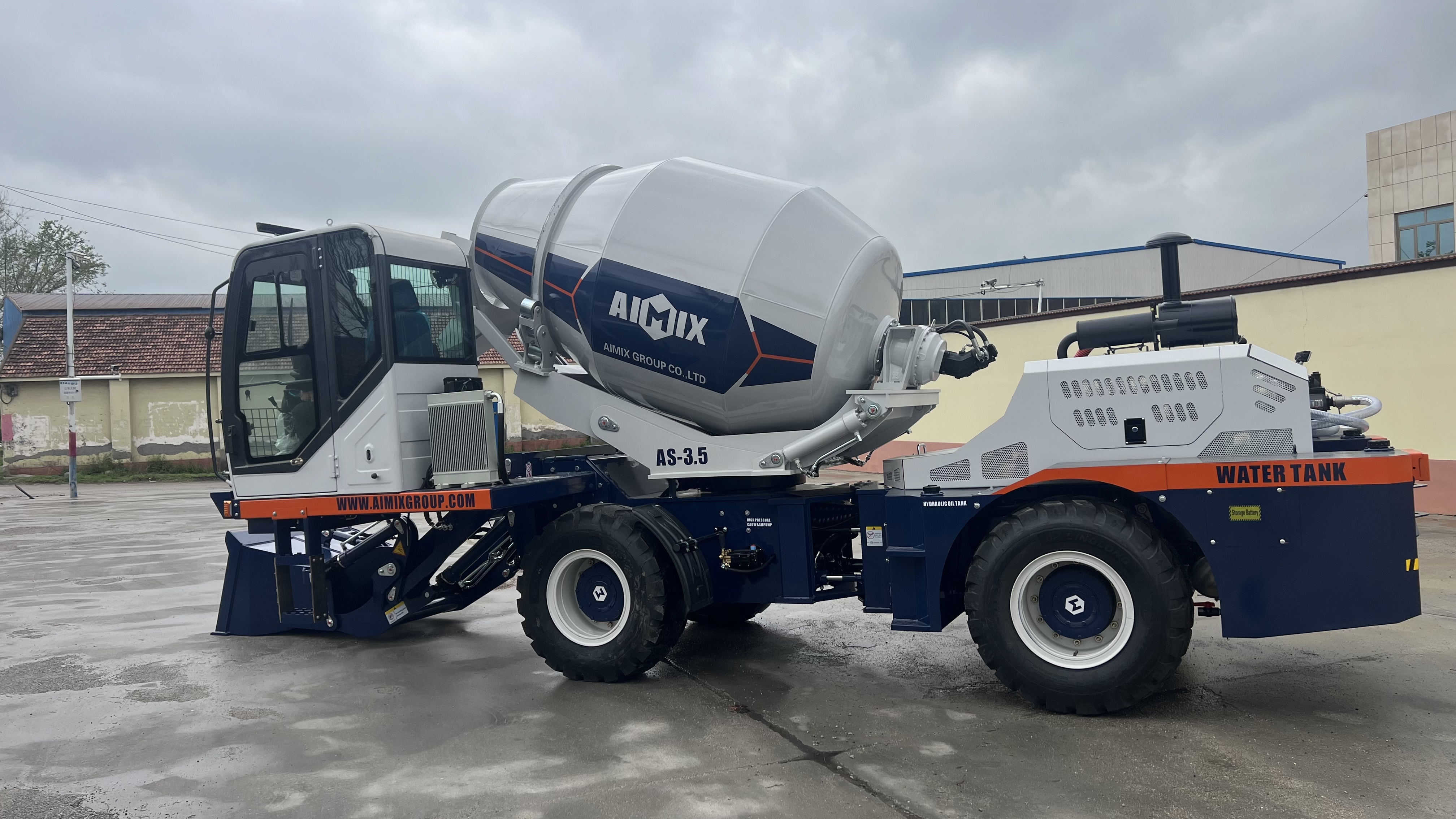
Where It Shows the Most Value: Bridges, Municipal Roads, and Narrow Sites
Scenario 1: Bridge pier / column pours that demand rhythm
Pier and column pours punish inconsistency. When the pour stops, vibration and placement sequencing become harder to control, and finishing quality can vary across lifts. The AS-5.5 helps teams keep a steadier supply cadence by producing near the work front, rather than gambling on external dispatch times. For many contractors, this operational control is a direct path to fewer pour interruptions and fewer quality deviations that later show up as repairs, honeycombing corrections, or surface inconsistencies.
Scenario 2: Urban road reconstruction with phased traffic control
City road works frequently operate in narrow windows—both physically and politically. Lane closures, noise restrictions, and time-limited permits compress the schedule. In such environments, replacing a small mobile station setup with an integrated mixer can simplify traffic inside the site and reduce the number of machines competing for space. The AS-5.5’s ability to move, produce, and discharge with fewer dependencies makes it particularly effective when the jobsite footprint changes day by day.
The key advantage is not only speed; it’s predictability. A predictable production rhythm helps the foreman align rebar checks, formwork readiness, and finishing crew timing—so the project is more likely to stay on the planned critical path and support on-time delivery.
Compliance & Confidence: Why Certification Matters in Large Projects
Large construction projects don’t buy equipment purely on capability—they buy on risk control. Procurement teams and consultants typically evaluate whether the equipment aligns with relevant international compliance practices (for example, CE conformity for applicable markets, and ISO 9001-aligned quality management practices in manufacturing). Certification is not a marketing decoration; it reduces the paperwork friction and approval time that often slows equipment onboarding for major sites.
More importantly, predictable performance supports consistent concrete outcomes. When the mixing and discharge process is stable and repeatable, it becomes easier to meet internal QA checks for slump targets, placement time, and finishing standards—especially across multiple work fronts.
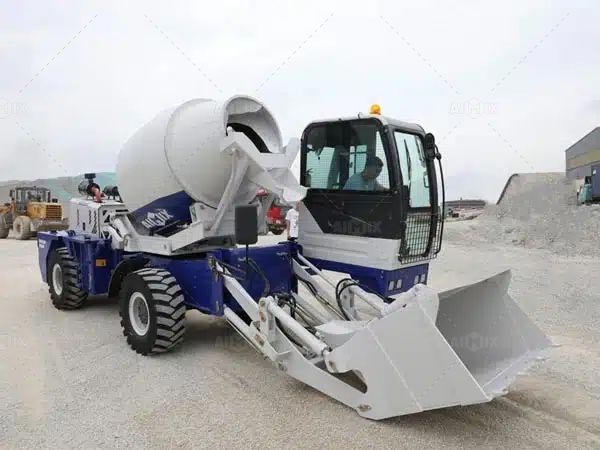
Decision Checklist: When AS-5.5 Is the Right Fit (and When It Isn’t)
Best-fit conditions
- Sites with space constraints where station setup is difficult.
- Projects needing steady on-site production near the pour area.
- Bridge works and municipal jobs where logistics variability threatens the critical path.
- Contractors aiming to reduce waiting time by 30%+ through fewer dependencies.
Consider alternatives if
- A high-volume, permanent batching plant is already installed with reliable dispatch and no access constraints.
- Material staging is impossible near the work face, causing long internal travel cycles.
- The project requires specialized mix designs that mandate centralized batching controls beyond site needs.
A More Controllable Jobsite: Less Manual Intervention, More Predictable Progress
The strongest case for the AS-5.5 is operational control. Instead of chasing external truck ETAs, teams can align production with the actual readiness of rebar, forms, inspection points, and finishing crews. That alignment is what makes the equipment feel like a productivity tool rather than simply another asset on the yard list.
In practical terms, it’s a way to efficiently replace traditional small batching stations, keep pours moving, reduce avoidable idle time, and help major projects stay on track—supporting on-time delivery without compromising consistency.
Ready to Upgrade Your On-Site Concrete Supply with an AS-5.5 Self Loading Concrete Mixer Truck?
Get a practical recommendation based on your pour schedule, site constraints, and target output (up to 22 m³/hour). If your goal is to cut waiting time by 30%+ and keep quality consistent across shifts, start here.
Request AS-5.5 Self Loading Concrete Mixer Truck Specs & Project Fit Assessment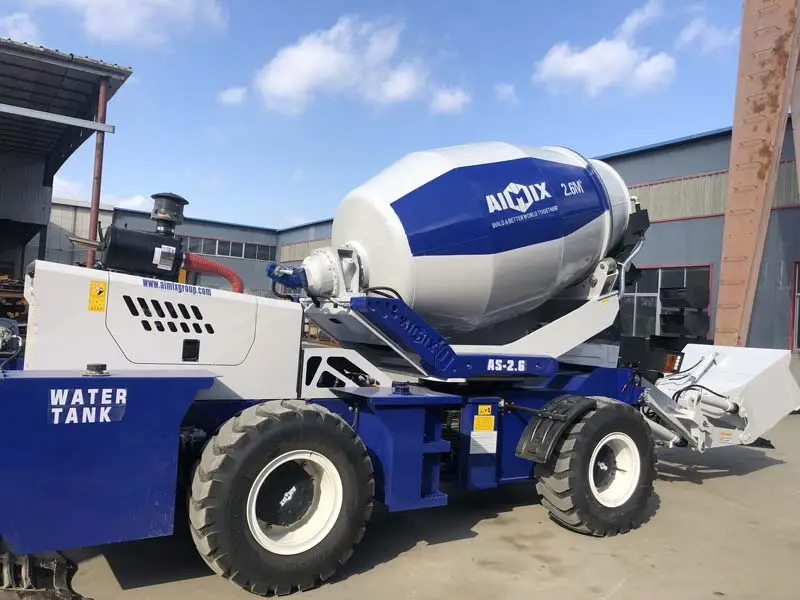





.jpg?x-oss-process=image/resize,h_1000,m_lfit/format,webp)