2025 Concrete Mixer Truck Procurement Guide: Parameter Comparison and Direct Purchase Channel Recommendations
20 11,2025
Industry Research
This guide is tailored for engineering procurement teams, aiming to assist them in navigating through the selection of concrete mixer trucks. It delves into key parameters and common pitfalls to avoid, while also suggesting cost - effective direct purchase channels. By following the insights provided, procurement professionals can precisely match their needs, sidestep blind investments, and ensure long - term value for their projects.

Key Considerations for Mixer Truck Procurement in 2025
For engineering procurement teams, selecting the right mixer truck is crucial as it directly impacts construction efficiency, operational costs, and project quality. However, the market is flooded with numerous brands, and issues like false configuration labeling and opaque pricing often make procurement decisions challenging. This article, based on the latest industry trends in 2025, breaks down the core parameter selection logic for mixer truck procurement, methods to avoid six common pitfalls, and recommends cost - effective direct - purchase channels from manufacturers to help buyers precisely match their needs and control costs.
Three Core Requirements to Clarify Before Purchase
Defining the usage scenarios and core requirements before purchasing is the foundation for avoiding selection mistakes. Here are three key dimensions:
- Operation Scenarios and Working Conditions: For short - distance operations on municipal roads or rural highways, 4 - 6 cubic meter models with a compact wheelbase and high flexibility are recommended. For long - distance and heavy - load operations such as large bridges and water conservancy projects, 8 - 12 cubic meter models with a maximum climbing gradient of at least 30% are preferred. In areas with urban traffic restrictions, new energy (pure - electric or hybrid) models should be considered to meet environmental and traffic requirements.
- Material Type Adaptability: When mixing high - viscosity materials like cement slurry or collapsible loess, models with double - helix variable - pitch blades and a water tank of at least 350L are needed to improve anti - clogging and cleaning capabilities. For mixing large - aggregate mixtures, pay attention to the wear - resistant lining plate material of the mixing drum (preferably high - manganese steel) to avoid frequent replacement due to wear.
- Operational Cost Control: Determine the daily operating mileage. If the daily driving distance is no more than 100km, pure - electric models with a range of at least 200km are more energy - efficient. For long - distance operations, hybrid models are recommended for their balance between range and fuel efficiency. Also, consider the post - maintenance costs and choose brands with high - compatibility parts and a dense network of after - sales service points.
Core Parameter Comparison: Avoiding False Configuration Labels
The parameters of a mixer truck directly determine its performance. Focus on these five key indicators during procurement:
| Parameter | Requirement |
| Mixing Drum Volume and Actual Loading Capacity | Confirm the effective volume (usually 80% - 90% of the rated volume). Check the rotation speed range (8 - 20r/min) to ensure uniform mixing. |
| Power System and Carrying Capacity | For diesel models, the engine power should be at least 220kW and the torque at least 1000N・m. For new energy models, focus on battery capacity (at least 200kWh for pure - electric models), charging efficiency (fast - charging to 80% in no more than 2 hours), and motor peak power. The chassis carrying capacity should match the operation requirements, with a double - layer frame structure and tire load index of at least 140 for heavy - load operations. |
| Blades and Mixing System | Choose double - helix blade structures, which improve material mixing uniformity by 30% and reduce jamming risk by 50%. The blade material should be wear - resistant alloy with a surfacing layer. Check the mixing drum inclination angle (usually 14 - 16°). |
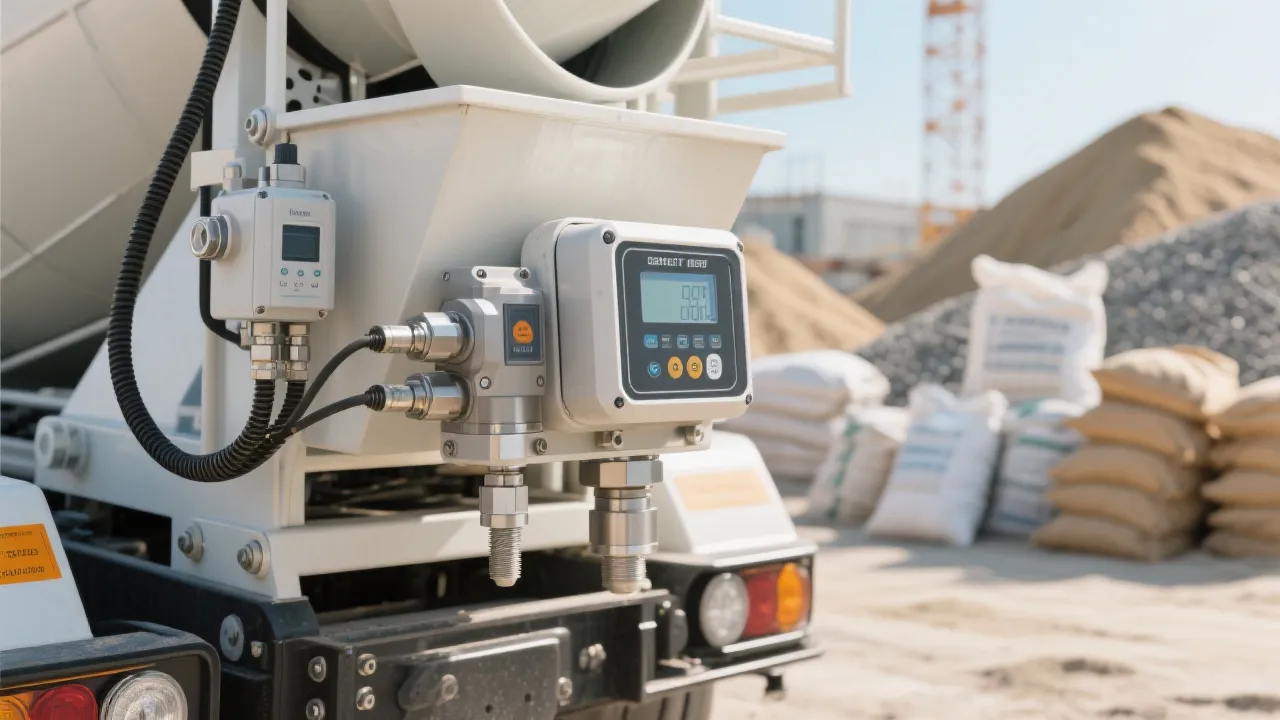
| Safety and Practical Configurations | Essential configurations include ROPS, reversing camera + radar, and tire pressure monitoring. For high - viscosity material operations, additional pressure sensing warning and vibration anti - jamming mechanisms are needed. The water tank volume should be at least 300L with a high - pressure flushing gun. |
| Energy Consumption and Environmental Indicators | Diesel models should meet the National VI b emission standard. For new energy models, focus on comprehensive energy consumption (no more than 50kWh/100km for pure - electric models) and battery warranty (at least 5 years or 200,000 km). |
Six Pitfalls to Avoid During Procurement
Based on numerous procurement cases, here are six common pitfalls to avoid:
- Avoid False Configuration Labels: Verify key parameters on - site before signing the contract, such as measuring the actual diameter of the mixing drum and checking the engine model.
- Reject Low - Price Traps: Be cautious of models priced more than 20% below the market average, as they may have refurbished parts, reduced frame thickness, or inferior blades, leading to frequent breakdowns and hidden costs.
- Verify Manufacturer Qualifications: Choose manufacturers with the "Special - Purpose Vehicle Production Enterprise Qualification" from the Ministry of Industry and Information Technology. Check the vehicle model's legitimacy through the "National Vehicle Announcement Inquiry System" to avoid non - registrable vehicles.
- Clarify After - Sales Service: Require the manufacturer to provide a written commitment on after - sales response time (on - site service within 24 hours), warranty period (at least 1 year or 30,000 km for the whole vehicle and at least 2 years for core components), and confirm the location of the nearest after - sales service point.
- Beware of Bundled Consumption: Some manufacturers force - bundle insurance and licensing services with additional charges. You can reject this and choose your own service channels to reduce extra expenses.
- Confirm Delivery Cycle: Specify the delivery time in the contract (no more than 30 days for regular models and no more than 60 days for customized models) and include compensation clauses for delayed delivery.
Recommended Cost - Effective Direct - Purchase Channels from Manufacturers
Choosing a formal procurement channel can ensure product quality and reduce intermediate costs. Here are three reliable channels:
- Official Direct - Sales Channels: Contact the manufacturer's sales department through the brand's official website or official WeChat account. This direct - to - production approach offers transparent prices (10% - 15% lower than dealers) and customizable configurations, suitable for bulk purchases.
- Authorized Regional Stores: Select authorized stores by checking the list on the manufacturer's official website. These stores offer more standardized pricing and better after - sales service compared to ordinary dealers.
- On - Site Procurement at Industry Exhibitions: Participate in large - scale exhibitions such as the China International Commercial Vehicle Exhibition and the Construction Machinery Expo. You can compare multiple brands and models on - site, and manufacturers usually offer exclusive exhibition discounts and direct communication with technical staff for customization.
By following the above selection logic, avoiding pitfalls, and using the recommended channels, procurement teams can accurately select mixer trucks that meet their needs, ensuring a cost - effective and long - lasting investment for project success. Explore our high - quality mixer trucks now!




.jpg?x-oss-process=image/resize,h_1000,m_lfit/format,webp)


.jpg?x-oss-process=image/resize,h_1000,m_lfit/format,webp)