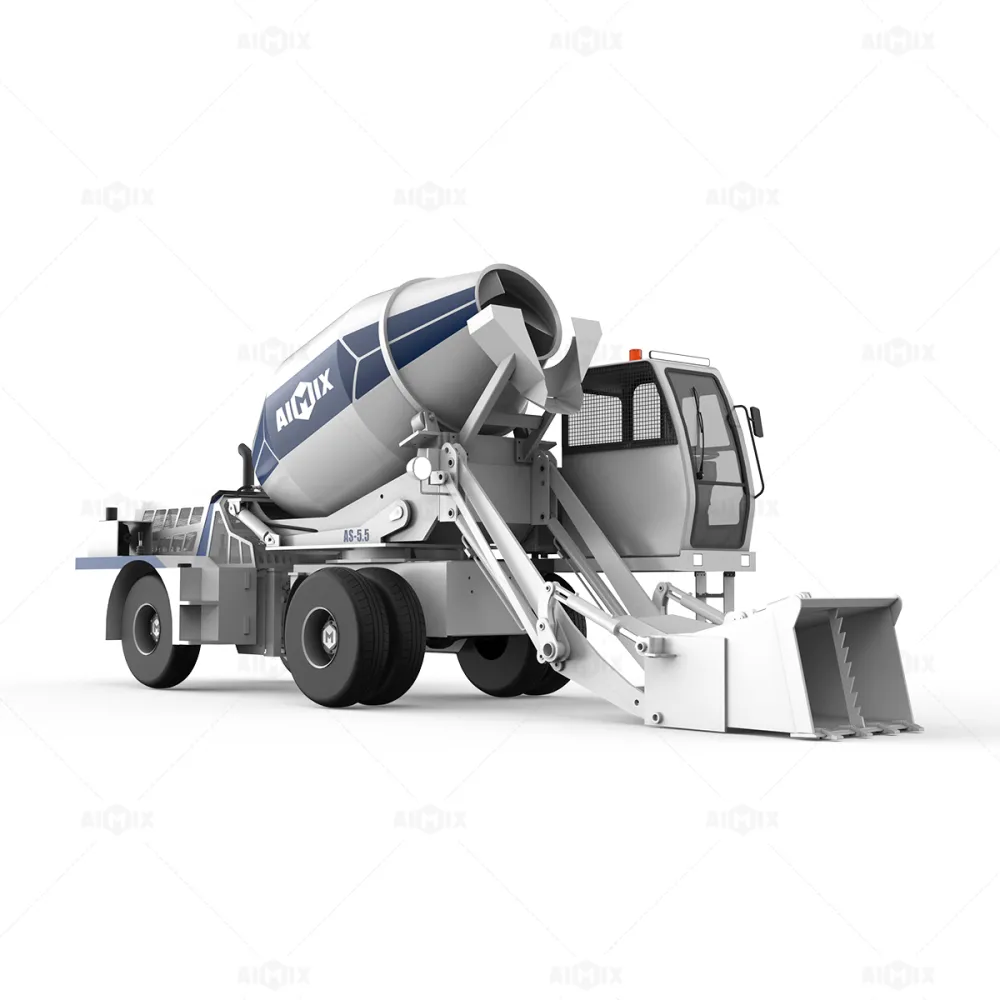
When handling small to medium construction projects, achieving consistently high-quality concrete is both crucial and challenging. Using a 2.6 cubic meter concrete mixer effectively demands strict adherence to precise steps that optimize material properties and mixing practices—especially when dealing with variable local raw materials like river sand with high mud content, commonly found in Southeast Asia.
The 2.6 cubic meter mixer strikes a balance between portability and batch size, perfectly tailored for projects requiring moderate concrete volumes with flexibility. Its capacity allows for improved productivity without compromising on the concrete’s homogeneity. However, the mixer’s effectiveness depends largely on your control over three technical pillars: accurate mix proportioning, scientific loading sequence, and optimal mixing duration.
Precision in the cement, sand, aggregate, and water ratios governs concrete strength and durability. For a typical screed mix suitable for Southeast Asian scenarios, consider a ratio around 1:2:4 by volume (cement:sand:coarse aggregate), adjusted to local material moisture and contamination levels. River sand’s often elevated mud content can drastically reduce bond strength if left untreated.
Tip: Pre-washing sand to reduce clay and silt content below 5% can save up to 20% in strength loss risk.
Scientific addition order prevents segregation and ensures uniform adhesion of cement paste to aggregates. Begin with adding coarse aggregates, followed by about half the water, then cement and sand. The remaining water is added gradually during mixing to reach the target slump of approximately 75 ± 25 mm for workable consistency.
This method disperses cement around the aggregates efficiently, especially critical when using river sand with impurities.
With a 2.6 cubic meter mixer, the ideal mixing time is between 3 to 4 minutes. Mixing longer may cause excess air entrainment, while shorter times risk incomplete coating and uneven consistency. Maintaining a consistent rotation speed of 12–14 rpm ensures cement paste uniformly envelopes each aggregate particle.
Attention: Adjust mixing time slightly if sand moisture levels exceed 8%, to prevent workability issues.
Southeast Asia’s abundant river sand often contains mud and clay particles, impairing concrete bonding. Practical adjustments include:
Regular on-site tests such as the slump test and routine sampling for compressive strength provide objective data to verify mix quality and adjust protocols promptly.
To ensure concrete consistency batch to batch, formulating an easy-to-follow checklist increases reliability significantly. Key points your checklist should cover:
The combination of checklists and digital aids like slump test video demonstrations helps operators rapidly align with standards while reducing human error.
AIMIX’s mixer design integrates intelligent control panels and durable drum blades engineered for thorough mixing cycles aligned with industry best practices. Its portability and optimal batch size suit mid-scale construction projects aiming for efficiency without sacrificing quality.
Get Your Concrete Mixing Standard Operating Handbook Now – Unlock Pro-Level Control on Every Batch

.jpg?x-oss-process=image/resize,h_1000,m_lfit/format,webp)